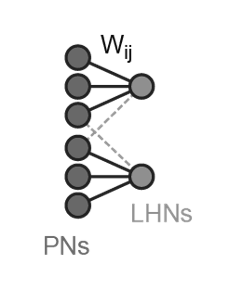
Dynamic neural computation → Dynamic behavior
Brains assign different value to sensory cues based on current needs and general context. For example, a smell may be pleasant if you’re hungry but aversive if you’re sick. Our work focuses on linking anatomical circuit connectivity, fine scale morphological properties of neurons, neuromodulator receptor expression profiles and their molecular pathways, and in vivo neurophysiology to understand how olfactory networks perform flexible computations. Using parallel molecular, computational, physiological, and behavioral techniques in the Drosophila melanogaster (fruit fly) brain, we test causal links between the activity of defined neural circuits, sensory processing, and perception.
We bridge cellular, molecular, synaptic and systems neuroscience and apply quantitative approaches to understand dynamic brain function with implications for both basic and translational neuroscience.
Our toolbox:
Neuroanatomy/Connectomics
Using immunohistochemistry, and connectomics, we understand the fine-scale anatomical properties of neurons and the synaptic connections between them.

Optogenetics
We assess neural circuit function and behavior with precise optical manipulation of synaptic partners.

in vivo electrophysiology
Using in vivo electrophysiological techniques (whole-cell patch clamp electrophysiology) we study the physiological properties of neurons.

in vivo imaging
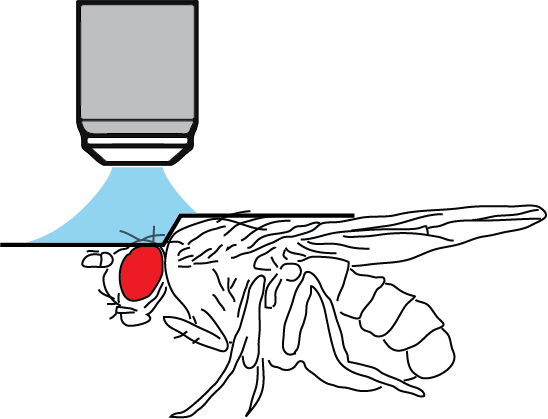
We study how both individual neurons and populations of neurons respond to and process odors using in vivo 2-photon optical imaging of voltage and calcium.
Behavior
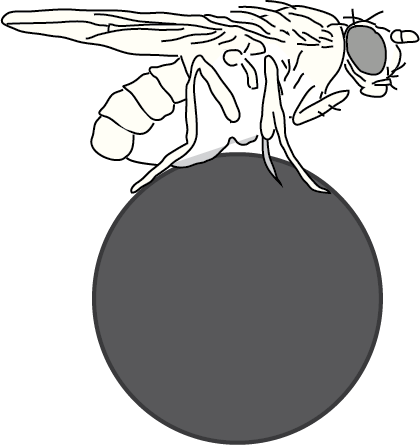
Flies exhibit robust olfactory driven behaviors. We determine how physiological state influences olfactory acuity and attraction/aversion.
Modeling
We build physiologically inspired neural models to test how neural connectivity and morphology informs function.